The quest for better healthcare technology in Africa often defaults to chasing the latest cutting-edge specifications. But in the real world of African county hospitals and mission clinics, this pursuit is a fundamental misstep.
Instead of chasing the highest resolution screen or the fastest processor, true innovation lies in designing devices that endure real-world conditions: erratic power, heat, dust, humidity, limited spare parts, and variable operator skill.
The Tale of Two Devices
Consider the vital difference between two devices operating miles apart in rural Kenya:
- The Paperweight X-ray: In a regional hospital, a sophisticated, imported digital X-ray unit sits idle. It’s a magnificent machine—when it works. But today, it’s useless, not because the main component is broken, but because the proprietary film printer ran out of specialized paper that takes three months to restock. Essential diagnostics are halted by a supply chain fragility. The device, designed for peak lab performance, is an expensive paperweight on the ground.
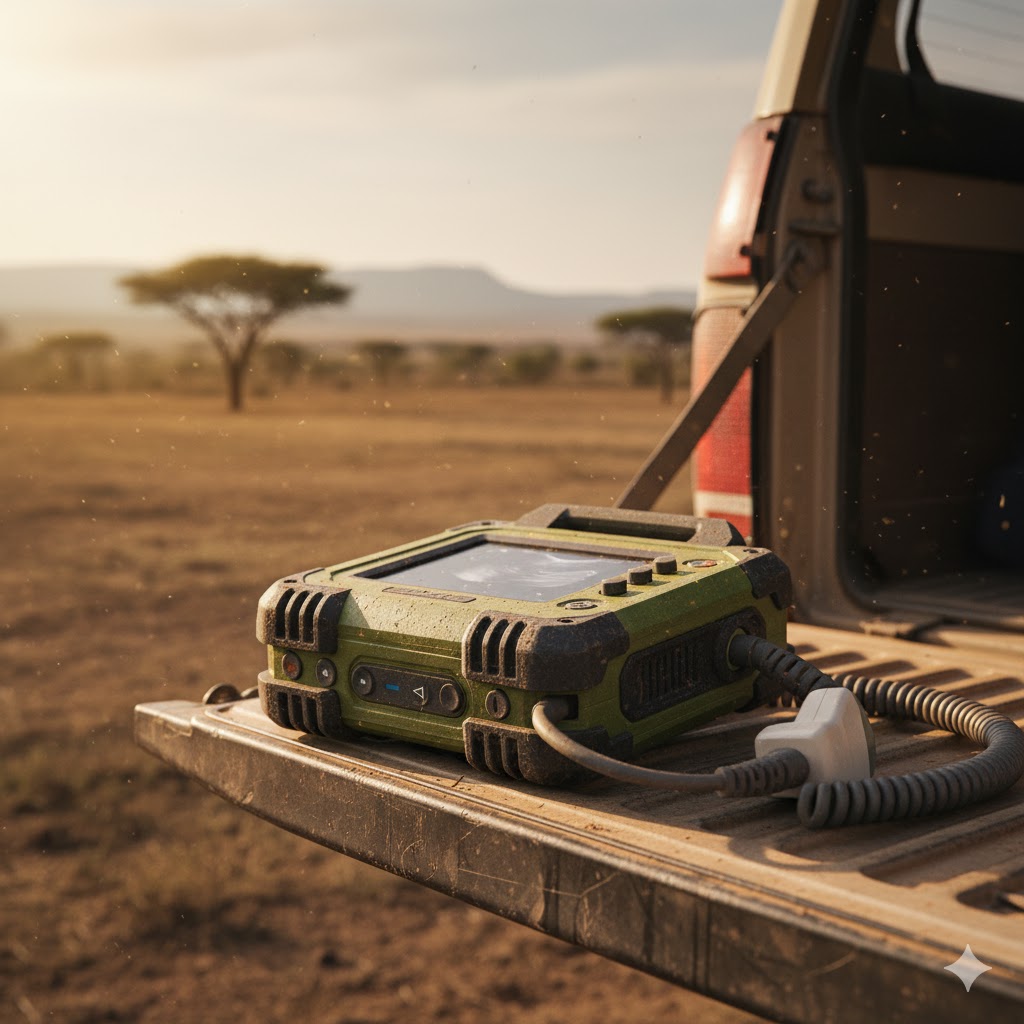
- The Resilient Scanner: Meanwhile, miles away in a remote mission clinic, a portable, handheld ultrasound device is thriving. It’s carried daily in the back of a rough-riding 4×4 pickup, endures high heat and dust, and relies on generic, globally-available components. It keeps working because it was designed for endurance, not perfection.
This contrast is the core of our message. A resilient medical device isn’t the one that works perfectly in a lab — it’s the one that keeps working, day after day, in a county hospital in Marsabit, a mission clinic in Homa Bay, or a mobile outreach unit in Turkana.
Redefining Resilience
Resilience is not simply about hardware strength; it’s about design empathy for the entire operating ecosystem. A device is resilient if the power, the consumables, and the maintenance are stable in a low-resource setting. The reality is stark: up to 70% of medical equipment in LMICs is non-functional (WHO, 2006).
The True Engineering Specifications for African MedTech
To build technology that saves lives, we must first confront the daily operational challenges that cause most devices to fail. These challenges are not obstacles; they are the true engineering specifications that define resilience:
Imagine a scenario where a device is deployed without considering the ground truth:
- Power Instability: The initial failure often begins with the erratic grid. Frequent blackouts, sudden voltage surges, or prolonged brownouts damage sensitive circuits, illustrating why devices must be designed with robust surge protection and wide voltage tolerance.
- Environmental Stress: If the device survives the power, it faces relentless heat and pervasive fine dust. Standard cooling fans fail quickly from dust ingestion, demanding sealed electronics and efficient passive cooling.
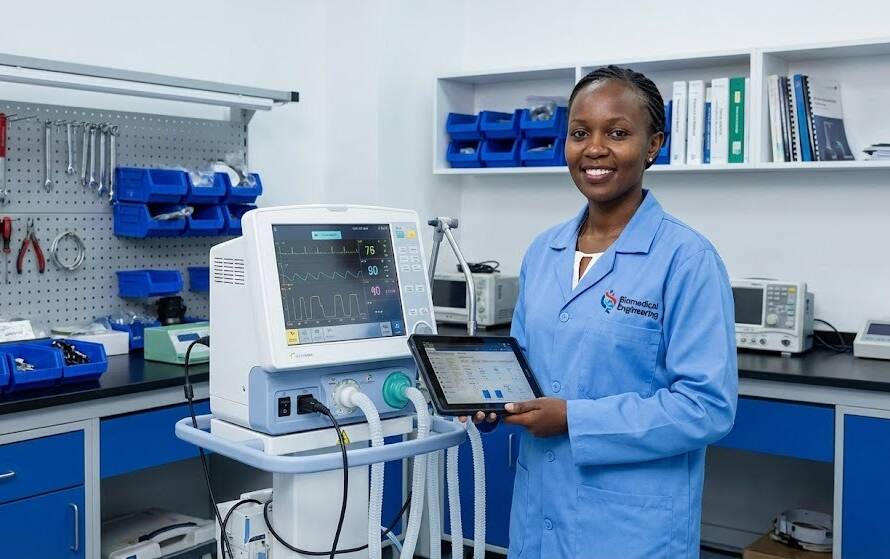
- Limited Technical Support: When the component inevitably fails, the lack of trained Biomedical Engineers and the long delay in spare parts means a minor fix turns into permanent downtime. This vulnerability mandates a design that uses modular, plug-and-play components for easy local repair.
- Supply Chain Gaps: Meanwhile, consumables, proprietary reagents, specialized paper, run out of stock, halting clinical services even if the main machine is intact. This logistical reality pushes design toward low-dependency systems that utilize generic or locally-sourced materials.
- Human Factors: Finally, high staff turnover and varied skill levels mean a complex interface leads directly to operational mistakes and device damage. Equipment must therefore be intuitive, featuring simplified, error-proof workflows to ensure safety and functionality.
These five realities; Power, Environment, Support, Supply Chain, and Human Factors; are the essential specifications for life-saving technology in Africa. Ignoring any one of them renders the most sophisticated machine worthless.