In Part 1, we established that true innovation in African MedTech is defined by resilience to the five major operational realities; not by high-end specifications. Now, we dive into the blueprint for devices designed not just to survive, but to thrive.
Beyond Power: Designing the Ecosystem
The conversation about African medical device failure often begins and ends with energy instability. Indeed, lack of reliable power is a critical barrier. Devices like Solar-powered Vaccine Refrigerators are a monument to this solution, engineered to bypass the power grid challenge entirely by going off-grid.
But true endurance requires looking beyond the battery pack. In African contexts, resilience must account for a range of environmental, logistical, and socio-economic realities. Therefore, devices must be designed to endure harsh environments, adapt to unpredictable conditions, and remain functional with minimal maintenance.
The Resilient Design Blueprint
The resilient design philosophy translates directly into three critical pillars for the product blueprint:
1. Durability and Repairability (Addressing Power & Environment)
Resilient designs begin with durability: choosing robust materials that can tolerate high temperatures, frequent movement, and repeated handling.
- Power Solutions: Designs must incorporate hybrid power systems, allow for solar direct-drive capability, and include robust, built-in surge protection with a wide voltage tolerance.
- Environmental Solutions: Equipment requires rugged enclosures, sealed electronics, and efficient passive cooling systems; avoiding fans which are prone to dust ingestion and failure.
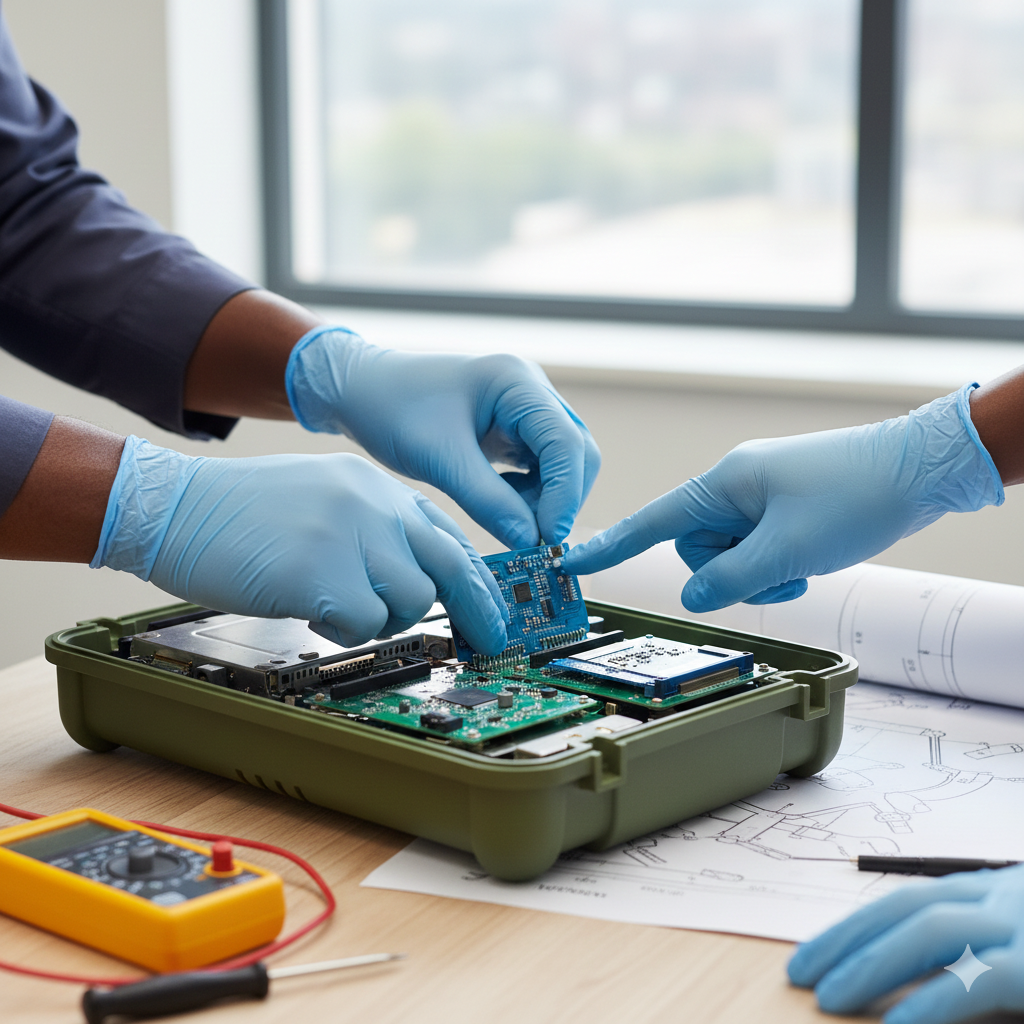
- Maintenance Solutions: Designs must incorporate modularity, enabling parts to be replaced or upgraded locally. Repairability is equally crucial; a resilient device should be easy to diagnose, fix, and recalibrate by local technicians using commonly available components and crucial remote diagnostics capability.
2. Supply-Chain Adaptability (Addressing Logistics)
A device’s dependency is its vulnerability. Devices that depend on imported consumables or proprietary accessories often fail once supply routes are disrupted.
- Low Dependency: The design implication here is prioritizing devices that use generic, locally sourced consumables or, even better, low-dependency systems that minimize the need for reagents.
- Open Source: Designing with open-source components not only extends a device’s lifespan but also builds local capacity for manufacturing and repair.
3. User Adaptability (Addressing Human Factors)
The final challenge is the human one: ensuring the device is fail-safe in facilities that experience varied user skill levels and high staff turnover.
- Intuitive Design: Equipment should be intuitive enough to operate safely even in settings with limited training. Clear labeling, multilingual interfaces where appropriate, and minimal calibration requirements can significantly enhance usability and safety.
- Error Proofing: Simplified, error-proof workflows minimize training time and operational mistakes, ensuring clinical services are not disrupted by preventable human errors.
In short, resilience is not a single feature; it is a design philosophy. It means thinking beyond the power cord, designing with profound design empathy, and engineering for endurance through durability, local repairability, supply-chain independence, and user intuition.